
The art of slowing down and enjoying one’s food is deeply ingrained in Italian culture. An Italian dinner is the reason to get out of bed in the morning and live. The Italians certainly know how seriously to treat their cuisine, and that’s likely due to the fact that it’s deeply ingrained in our culture to savor each bite. Americans may find the concept of planning their entire day around meals to be ridiculous, but as you get to know Italy and its culinary culture, you’ll realize how it all comes together to create La Dolce Vita.

Join a talented local chef born and raised in the heart of the most authentic food market of Florence on an unforgettable food tour

This tour is meant for sweet tooth connoisseurs, eager to taste the traditions and the cultural richness of the city through its historical bakeries, cafés and pastry shops!

Captivating and historical, this tour will take you to two UNESCO Heritage sites. Siena is Italy’s most enchanting medieval city, with the Piazza del Campo at its heart.
Enthusiastic about cuisine and exploring the world? Indulge in some of the most delectable local cuisines on our culinary excursions, and your taste buds will be in a tizzy. We are taken to places and meet people through Italian cuisine that the majority of tourists never get to see.
Discover the most mouthwatering spots in Italy with Walk & Bite.

This is an unmissable tour when you are in Naples, the home of pizza! Learn how to cook the Italian dish of excellence… the symbol of Naples, a delicious pizza Margherita!

We host our Italian Gelato and Fettuccine pasta workshop in the heart of Rome, within the breathtaking setting of Piazza Navona.

Learn how to make two classic Italian dishes—pizza and tiramisu—during this short workshop with a local Italian chef as your guide.
Come to the Walk & Bite Workshops for an immersive cooking session where you can discover the recipes for some of Italy’s most beloved meals. Try your hand at some challenging recipes; you’ll have a blast. The supplies and tools needed to prepare the meals will be provided to each participant at their designated station. Next, enjoy a variety of local red and white wines while you savor your prepared dishes.

A semi-private tour at your own pace that will remain in your memories forever! Admire the symbol of Rome, the Colosseum, and the Roman Forums

Have you ever wanted to climb all the steps up to the top of the Leaning Tower of Pisa? Well, this half day tour from Florence gives you the opportunity

A whole day immersed in luxury! Discover both the wonderful Lake Como, a source of inspiration for numerous love poems and the sumptuous city of Lugano,


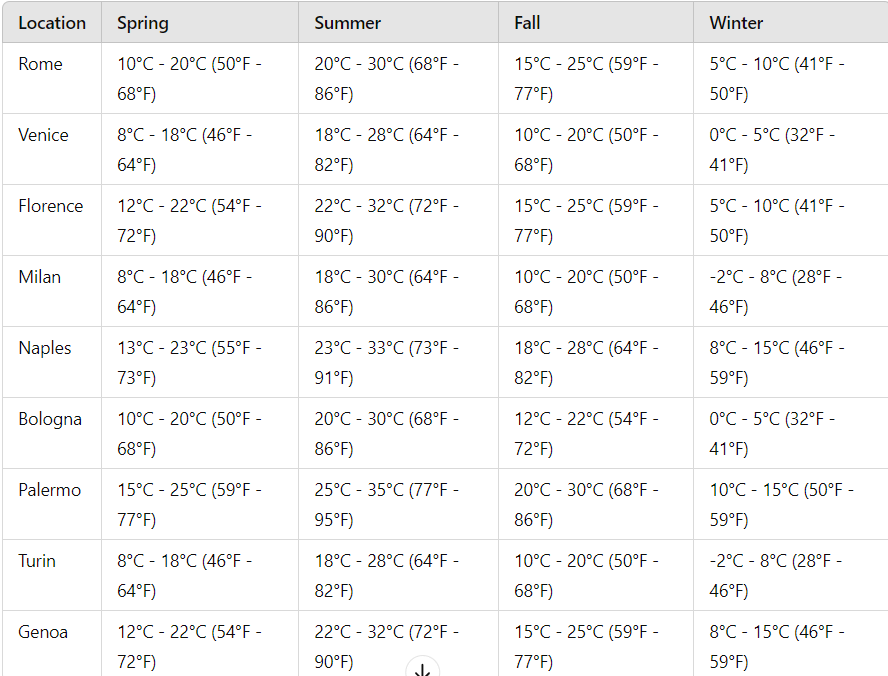
Summer in Italy can be quite intense, with temperatures often reaching 100°F (38°C), especially in southern regions like Sicily and Calabria. It’s still a great time to visit if you prepare properly for the heat. Make sure to bring UV umbrellas, sunscreen, and stay hydrated. However, some places, like Rome and Florence, can feel unbearably hot between 12 PM and 5 PM during peak summer.
Winter can bring cold weather and snow to certain areas, particularly in the northern regions and mountainous areas like the Alps and Dolomites. It’s considered the low season for tourism, running from November through March.
Spring is a wonderful time to visit, as everything is in full bloom and the weather is pleasant without being too hot. April and May are ideal months to explore Italy, with comfortable temperatures and fewer tourists.
Fall, particularly September and October, is another excellent time to visit. The weather remains warm, but the crowds are smaller, and temperatures are generally mild across the country. This is an ideal time to enjoy the beauty of Italy’s landscapes and cities without the summer rush.
During the summer months in Italy, the heat can be quite intense, especially in southern regions like Sicily, where temperatures can reach up to 40°C with high humidity. Lightweight clothing such as sleeveless tops and shorts are generally acceptable to stay cool, but it’s advisable to choose styles that are modest and not overly revealing. However, keep in mind that not all regions of Italy experience such extreme heat, so dress according to the specific climate of your destination.
Fall in Italy brings a mix of temperatures, with warm days and cooler evenings. Layering is key to adjust to these fluctuations throughout the day. It’s interesting how the sun can make daytime feel warmer than it actually is, while evenings tend to cool down noticeably. Additionally, fall tends to be rainier than spring, so having a good quality raincoat handy is advisable to stay dry during occasional showers.
Winter in Italy is typically the wettest season, characterized by varying temperatures depending on your location. Coastal areas generally experience milder winters compared to inland regions, where temperatures can drop significantly. Packing warm clothes is essential, along with a sturdy raincoat to cope with frequent rainfall. Whether you’re exploring coastal cities or venturing inland, being prepared for chilly and wet conditions will ensure a comfortable winter experience in Italy.
Italy operates using the Euro (EUR or €) as its official currency. For travelers heading to this beautiful destination, knowing how to manage currency exchanges is essential. While some businesses in tourist areas might accept US Dollars or British Pounds, the Euro is the widely preferred currency for transactions. It’s recommended to have Euros on hand to avoid any inconvenience, especially in more local or non-touristy establishments.
In Italy, English is spoken more commonly in major tourist areas and cities like Rome, Florence, and Venice. However, outside of these hotspots, in rural regions and smaller towns, you might find fewer people who speak English fluently. This can make everyday activities such as ordering food, asking for directions, or shopping a bit challenging. Learning a few basic Italian phrases can be incredibly helpful and is often appreciated by locals. Additionally, carrying a phrasebook or using a translation app can ease communication barriers significantly.
In popular tourist destinations, English is more widely understood, especially in hotels, restaurants, and shops that cater to visitors. However, having some knowledge of Italian can still enhance your interactions and experiences. Italians generally appreciate efforts to speak their language, and even simple phrases can go a long way. Using gestures and being patient can also help bridge the language gap, ensuring a smoother and more enjoyable experience while traveling in Italy.
