
The food that characterizes Spain is steeped in centuries of history. Pintxos in Basque Country, vintages along the Empordá wine route, Catalonian Moorish and Mediterranean cuisine, and Andalusian sherry—that’s what you can expect when you visit Spain. Walk & Bite offers gastronomic and vino tours that will reveal the real Spain.

The best way to discover the secrets, the highlights of the city and its very origins, with 11 different tastings all throughout the walk! A “Brunch experience”!

Take a break from the beach, and let your palette guide you! Explore the Municipal Market of Marbella, Spain, by the hand of our “local expert” and discover the rich culinary heritage of Andalusia.

Get your bearings by strolling through the city’s old Jewish quarter, with its latticework of narrow, cobbled streets that transmit humming energy like live cables. Thread your way between three hand-picked local taverns
Spain is a culinary lover’s dream! Embark on a culinary journey across the city and learn about the top restaurants serving regional specialties. Your taste senses will be dancing with delight on a Spanish cuisine tour!
Discover the most mouthwatering spots in Italy with Walk & Bite.

Barcelona combines modern and historic architecture in a unique way. The modernist movement of Picasso, Dali and Gaudí left its distinctive mark on the city.

The capital of the Basque Country is today a modern and vibrant artistic city, but it’s roots are seated upon its former industrial glory and it’s proud Basque heritage. There are so many things to do, see and try out here that it is

Madrid was a city built to be a capital, what it has been since 1561. It boasts many attractions like the Prado Museum and the largest European palace, the Royal Palace. There is so much to see, so much to know
Take a guided art and culture tour of Spain with a local expert and see the country as it really is. Immerse yourself in the local customs and discover the true essence of Spain on an enlightening journey brimming with cultural treasures.


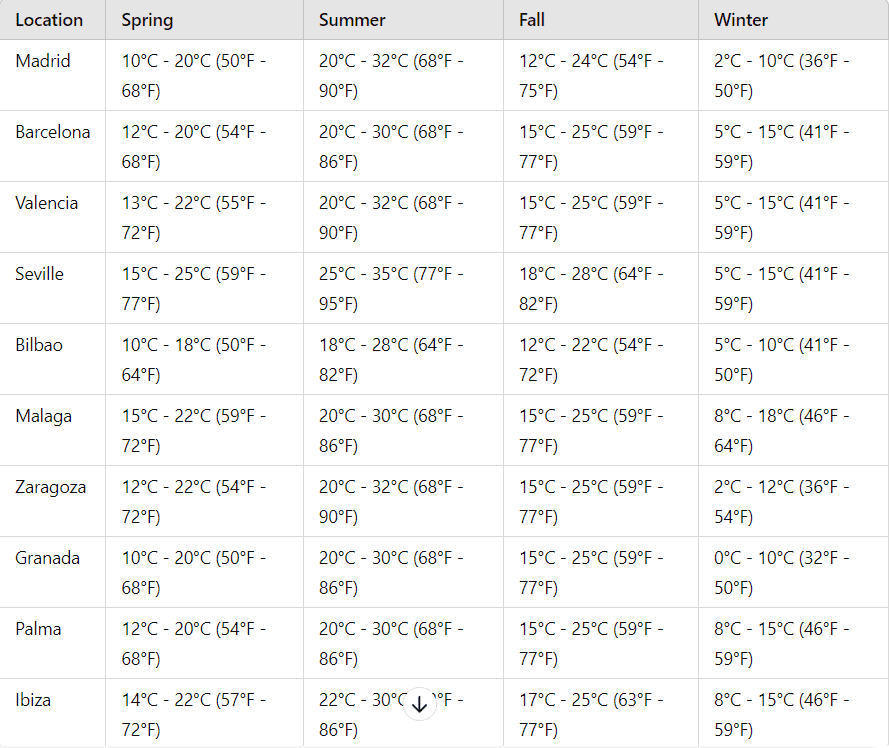
Spain experiences four distinct seasons, each offering unique weather patterns and opportunities for different activities.
Spring in Spain is a time of mild temperatures and blooming landscapes. The weather varies by region, with northern areas experiencing cooler and wetter conditions, while the south starts to warm up significantly. Average temperatures range from 15°C (59°F) to 22°C (72°F). This season is ideal for sightseeing and outdoor activities, as the country emerges from winter with colorful flora and comfortable weather.
Summer is characterized by hot, sunny weather, especially in central and southern Spain. Northern coastal areas remain milder, with temperatures averaging 20°C to 25°C (68°F to 77°F), while cities like Seville and Madrid can exceed 35°C (95°F). The Canary Islands enjoy consistent warmth without extreme heat, averaging 22°C to 28°C (72°F to 82°F). This season is perfect for beach vacations and enjoying Spain’s vibrant nightlife and festivals.
Autumn brings cooler temperatures and more variable weather, with the north experiencing more rain. Average temperatures drop to 15°C to 25°C (59°F to 77°F), making it a pleasant time for travel and exploring cities without the summer crowds. The countryside is lush from late summer rains, and the harvest season offers a bounty of local produce and wine festivals.
Winter in Spain is mild compared to northern Europe, especially along the Mediterranean coast and in the south. Northern regions and higher altitudes, like the Pyrenees, can see colder temperatures and snowfall, making them popular for winter sports. Coastal areas like Andalusia enjoy mild winters with temperatures ranging from 10°C to 18°C (50°F to 64°F). This season is quieter, offering a more relaxed pace and the chance to experience local traditions and festivals.
Spring in Spain can be quite variable, with cooler mornings and evenings and warmer afternoons. Lightweight layers are essential, allowing you to adjust to the changing temperatures throughout the day. Pack long-sleeved shirts, light sweaters, and a medium-weight jacket. Comfortable walking shoes are a must for sightseeing, and don’t forget an umbrella or a light raincoat for occasional spring showers.

Summer is hot and dry, especially in central and southern Spain. Light, breathable clothing is essential. Opt for cotton or linen shirts, shorts, and dresses. A wide-brimmed hat, sunglasses, and high-SPF sunscreen are crucial for protection against the intense sun. Sandals or light shoes are appropriate for most activities. If you plan to visit religious sites, bring a shawl or light scarf to cover your shoulders as a sign of respect.
Autumn temperatures can range from warm to cool, gradually getting colder as the season progresses. Layering remains important, with light sweaters, long-sleeved tops, and a heavier jacket for the cooler days. Comfortable, waterproof shoes are advisable due to increased rainfall. This is also a good time to bring along a scarf and a hat for additional warmth in the evenings.
Winter in Spain varies greatly by region. In the north and mountainous areas, it can be quite cold and snowy, requiring warm clothing such as a heavy coat, sweaters, and insulated boots. In the south and along the Mediterranean coast, winters are milder but still cool, so pack a medium-weight coat, sweaters, and long pants. Accessories like gloves, hats, and scarves are useful for chilly mornings and evenings. Rain is more common in winter, so a waterproof jacket or umbrella is also recommended.
These guidelines should help you stay comfortable and appropriately dressed for Spain’s diverse climates throughout the year
Spain uses the euro (€) as its official currency. Coins come in denominations of 1, 2, 5, 10, 20, and 50 cents, as well as 1 and 2 euros. Banknotes are available in 5, 10, 20, 50, 100, 200, and 500 euro denominations. Credit and debit cards are widely accepted, and ATMs are readily available throughout the country, making it easy for travelers to access cash. It’s advisable to carry some cash for small purchases and in rural areas where card payments might not be accepted.
In Spain, the official language is Spanish, also known as Castilian, spoken by the majority of the population. Spanish, one of the most widely spoken languages globally, has a rich literary and cultural heritage.
In addition to Spanish, several regional languages are co-official in their respective autonomous communities. These include Catalan in Catalonia, Valencian in the Valencian Community, Galician in Galicia, and Basque in the Basque Country. These regional languages have strong cultural significance and are used in education, media, and daily communication within their regions.
English is also widely understood and spoken, particularly in tourist areas, major cities, and among the younger population. The prevalence of English is due to its presence in the education system and the impact of tourism and international business.
In summary, Spanish is the official and primary language in Spain, with several regional languages holding co-official status in their areas. English is commonly spoken, especially in tourist destinations, making communication easier for English-speaking visitors.